
25 Decluttering Tasks You Can Do in 15 Minutes or Less
When people tell me they need to declutter, they usually talk about it like it has to be a major project. The garage. The whole closet. Every kitchen cabinet. The entire playroom.
And I get it. When you look around your house and see several spaces that need attention, it is very easy to feel like you need an entire free weekend before you can even start. The problem is that free weekend usually never comes. So the clutter stays, the frustration builds, and your home starts to feel like one more thing on your list that you are behind on. But decluttering does not have to work that way. Some of the best progress you can make happens in ten or fifteen minutes. The goal is not to finish an entire room or make your house look Pinterest-worthy. The goal is simply to make one small space better than it was when you started.
Set a timer. Pick one area. Start with the easy decisions. Throw away the trash, put things back where they belong, and remove the things you already know you do not need. When the timer goes off, you can stop. It still counts.
Start With the Easy Stuff
I am a big believer in starting with the obvious. You do not need to begin by pulling every single thing out of your closet and piling it on your bed. In fact, if you are already feeling overwhelmed by your house, creating an even bigger mess before you can make it better is probably not going to help. Instead, look for the things that require almost no decision-making: trash, broken items, expired products, empty containers, outgrown clothes, things you never use, and items that simply belong somewhere else. Those little decisions create visible progress quickly, and that progress makes it much easier to keep going.
If you are not sure where to begin, here are 25 easy places to start.
Kitchen
1. Throw away the obvious trash on your kitchen counters.
Receipts, wrappers, junk mail, old school papers, empty packaging—start with anything that is unquestionably trash. You might be surprised by how much calmer the counter looks after just a few minutes.
2. Put away everything on one section of the counter that already has a home.
You are not reorganizing the kitchen today. You are simply taking the things that wandered out of their normal places and putting them back.
3. Check one refrigerator shelf for expired food.
Not the entire refrigerator. Pick one shelf and remove anything expired, empty, or clearly past its prime.
4. Check one pantry category.
Choose cereal, snacks, canned goods, baking supplies, or another small category. Toss anything expired or stale and move on.
5. Match your food-storage containers and lids.
If you have a lid with no container or a container with no lid, you probably do not need to keep waiting for its long-lost partner to return.
Bathroom
6. Toss empty bottles and packaging.
Bathrooms have a way of collecting nearly empty shampoo bottles, empty toothpaste tubes, packaging, and products that should have left weeks ago. Start there.
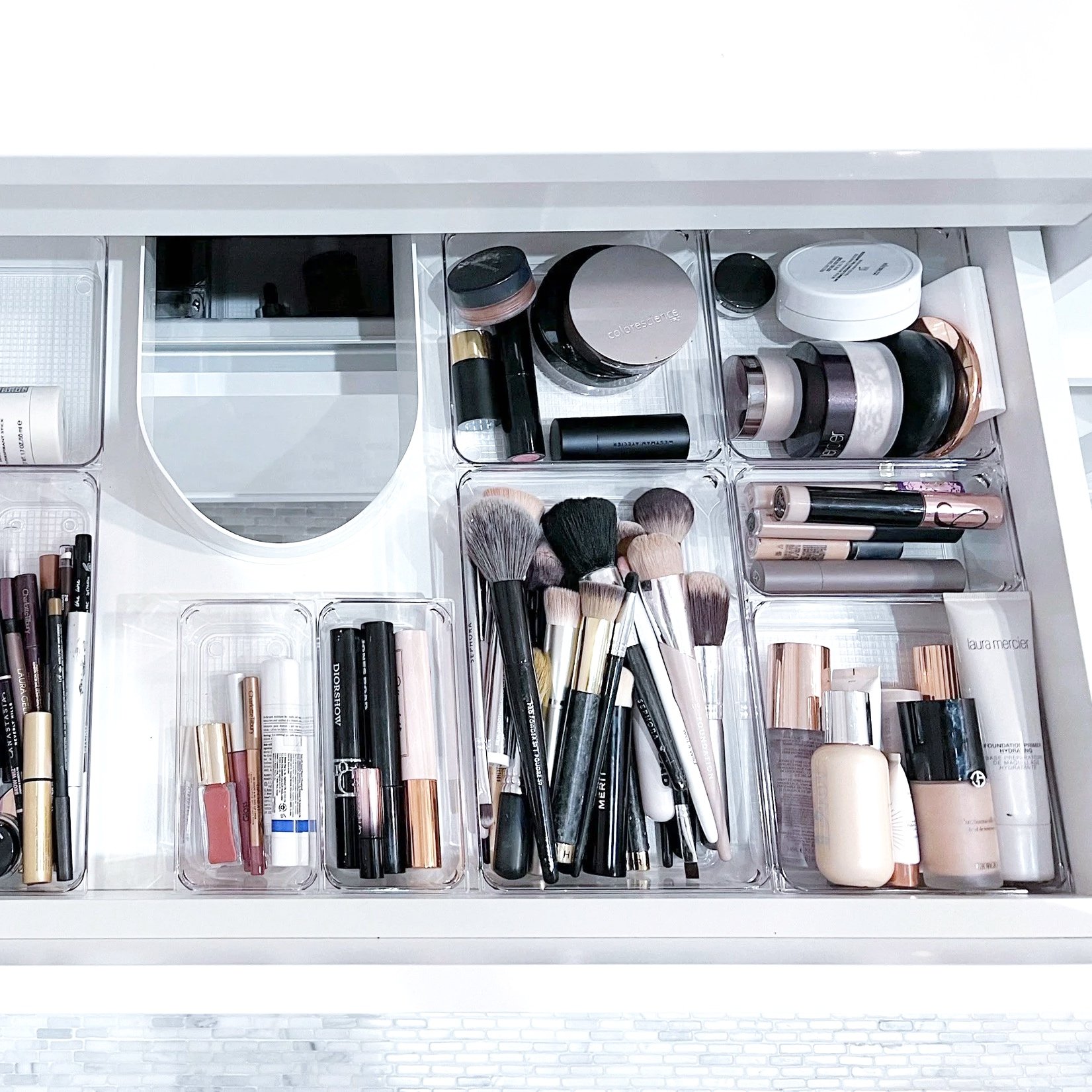
An organized bathroom vanity drawer with makeup, skincare, and beauty essentials arranged in clear containers for easy everyday access.
7. Check one drawer or cabinet for expired products.
You do not need to empty every bathroom cabinet. One drawer is enough for today.
8. Pull out products you already know you do not use.
Maybe you bought a moisturizer that you hated or a hair product that never worked for you. If you keep passing over it, give yourself permission to let it go.
9. Put bathroom items back where they belong.
Hair tools, makeup, towels, toiletries, and medications tend to migrate. Sometimes simply returning everything to its usual place is enough to make the bathroom feel considerably better.
10. Remove worn-out towels and washcloths.
If everyone in the family digs around them to find a better towel, that is probably your sign.
Bedroom and Closet
11. Pick up the things on your bedroom floor that belong somewhere else.
Start with the shoes, laundry, cups, bags, and miscellaneous things that have made their way into the room.
12. Remove five pieces of clothing you already know you do not wear.
Do not turn this into a full wardrobe evaluation. We all have a few pieces we already know we are never wearing again. Start with those.
13. Pull out shoes that hurt, do not fit, or never get worn.
You do not need to talk yourself into keeping uncomfortable shoes because you paid good money for them three years ago.
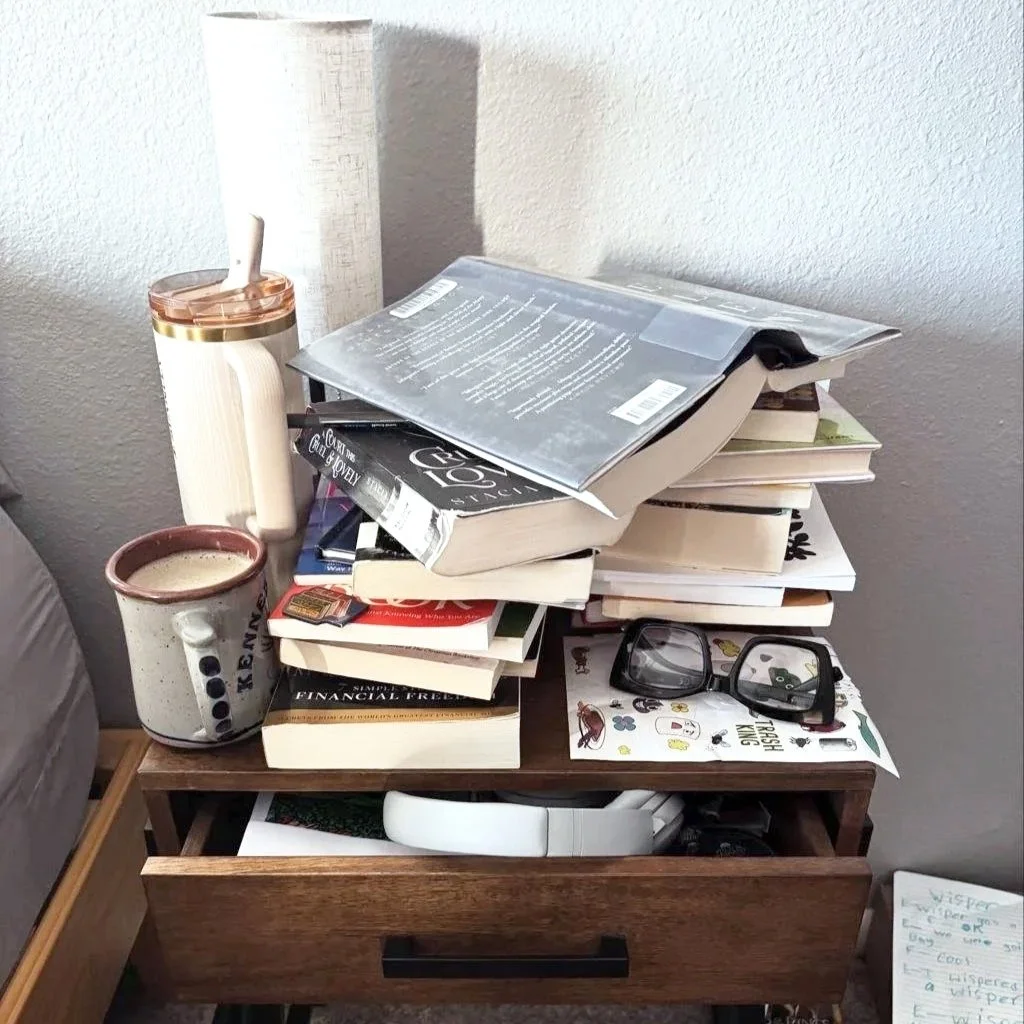
A cluttered bedside table with books, a coffee mug, water bottle, glasses, and everyday items piled on the surface, showing how quickly a functional space can become overwhelmed by daily clutter.
14. Clear the top of your dresser or nightstand.
Throw away the trash, return misplaced items, and leave the things you actually use. A clear nightstand can make the whole bedroom feel a little calmer.
15. Remove empty hangers and dry-cleaning bags from the closet.
It is a tiny job, but removing visual clutter makes it much easier to see what you actually have.
Everyday Clutter
16. Sort one small stack of mail.
Recycle the junk immediately. Put anything that requires action somewhere you will actually see and handle it. You do not need to tackle every piece of paper in your house.
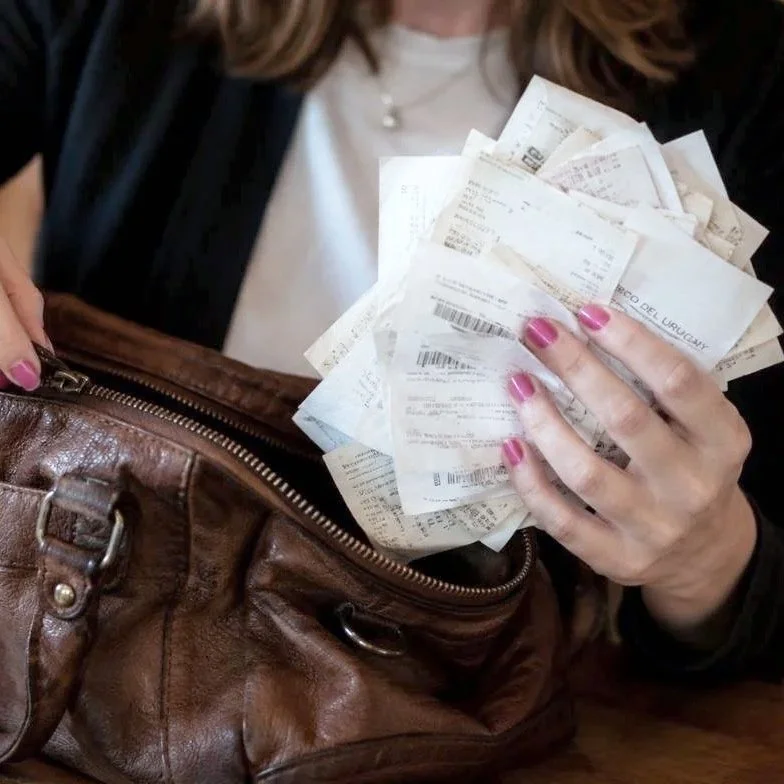
A purse overflowing with old receipts, illustrating how everyday clutter can build up in small spaces and why regular decluttering matters.
17. Clean out your purse or work bag.
Receipts, wrappers, old lists, random papers, dried-up pens—it all adds up. Give yourself ten minutes and get rid of the obvious stuff.
18. Spend 15 minutes clearing clutter from your car.
Grab a bag and remove cups, trash, receipts, jackets, toys, and everything else that does not need to be living in your vehicle.
19. Walk through one room with a trash bag.
This one is incredibly simple: do not organize anything. Just look for trash and remove it.
20. Walk through one room and put misplaced items back where they belong.
Sometimes a room is not actually too full. It just has too many things in the wrong places. The coffee mug goes back to the kitchen. The shoes go into the closet. The phone charger goes back beside the desk. Those few minutes can make a bigger difference than you would expect.
Family Spaces
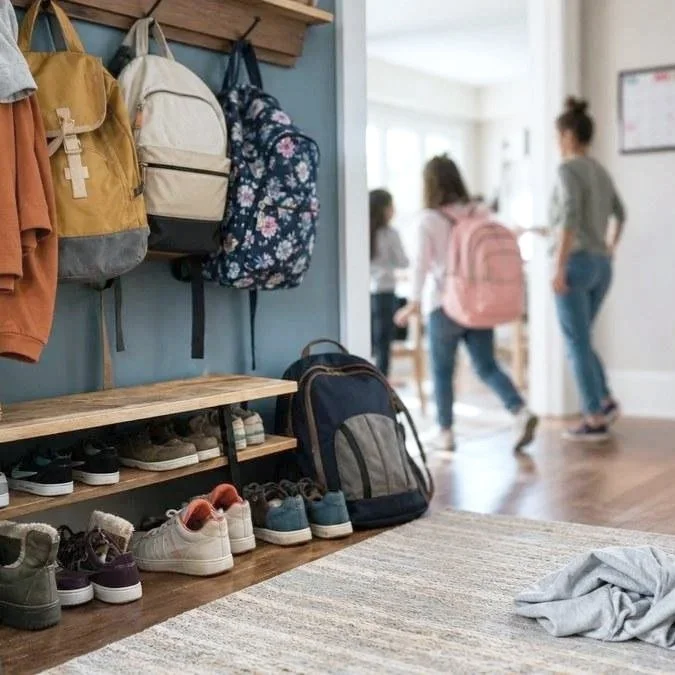
A busy family entryway with backpacks, jackets, shoes, and everyday items, showing how clutter can quickly build up in high-traffic areas of the home.
21. Clear the family drop zone.
Whatever your family uses—the kitchen counter, entry table, mudroom, bench—it probably collects backpacks, shoes, mail, water bottles, chargers, and school papers. Spend a few minutes removing everything that does not actually need to be there.
22. Toss broken toys, dried-out markers, and empty craft supplies.
You do not have to reorganize the whole playroom. Start with the things nobody can use anyway.
23. Find five things your family has outgrown.
Look for clothes, shoes, books, toys, or sports equipment that you already know your family is finished with.
24. Fill one small donation bag.
Decluttering does not have to mean filling the back of your SUV with donations. Five or ten things leaving your home is still five or ten fewer things you have to store, manage, clean around, and put away.
25. Choose one small area anywhere in the house and make it better.
Maybe it is the chair that keeps collecting clothes. Maybe it is one shelf in the laundry room, a corner of the mudroom, the coffee table, or the bathroom counter. You get to decide what “better” looks like.
That is really the whole point.
The 10–15 Minute Rule
One of the best things you can do when you are trying to get your home under control is give yourself permission to stop. If you set a timer for fifteen minutes and only clear half of the counter, you still accomplished something. You do not suddenly owe the house another three hours because you started.
I actually think this makes it easier to come back and do another little bit tomorrow. The task never becomes so exhausting that you dread doing it again. Ten minutes today. Fifteen tomorrow. Another small area over the weekend. It may not feel dramatic, but those small resets start to add up. And for most busy families, that is a much more realistic approach than waiting for the magical Saturday when nobody needs you and you have eight uninterrupted hours to declutter the house.
Declutter First. Organize Later.
This is one of the biggest things I want people to understand: you do not have to organize everything you own. Sometimes you just need less stuff. You do not need to buy another basket to hold things nobody uses. You do not need matching containers for food that should have been thrown away six months ago. And you do not need to create an elaborate system for items that simply need to be returned to the place where they already belong. So before you head to the store and start buying containers, work with what you have. Remove the obvious clutter first. Put things back where they belong. Decide what is actually staying. Then—and only then—look at the space and decide whether you need a better system for what remains. Sometimes you will. And sometimes, once all the extra stuff is gone, you will realize the space works perfectly well exactly as it is.
Do Not Make It Harder Than It Needs to Be
Not every decluttering session needs to involve difficult decisions. You do not have to start with your children's baby clothes, your grandmother's dishes, or the box of sentimental things you have been avoiding for ten years. Save those decisions for another day.
When you only have ten or fifteen minutes, start with the things you already know. Trash. Expired. Broken. Empty. Outgrown. Unused. In the wrong place. The easier decisions create momentum, and that momentum is what helps you eventually tackle the harder spaces.
Final Thoughts
Your home does not need to look like a photograph when the timer goes off. It just needs to function a little better than it did fifteen minutes ago. There may still be things on the counter. Your drawer may not be perfectly organized. The closet might still need another round next week. That is okay.
Most of us are living very real lives inside our homes. There are kids and pets and backpacks and laundry and groceries and work and a hundred other things happening. The goal is not to make it look as though nobody lives there. The goal is to make your home a little easier to live in.
So pick one small space. Set the timer. Start with the obvious things, and make it better than it was when you started. That is progress. At Valkyrie Living, I help busy families clear the clutter and create practical, beautiful systems that make home easier to manage—because your home should support your life, not become another full-time job.
